Full performance metrics
Sharpe, Calmar, Sortino ratios alongside raw annualized return and maximum drawdown — the numbers that matter for evaluating strategy robustness.
Backtesting
Our backtesting service runs your logic against years of tick-level historical data and shows you exactly what happened, trade by trade.
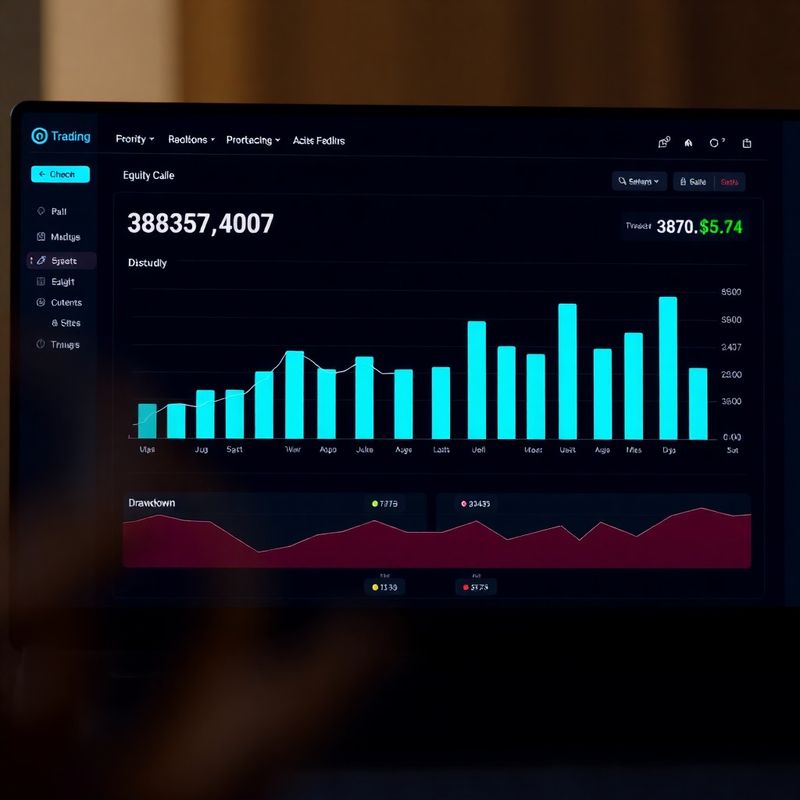
A backtest is only useful if it is honest. We run simulations with realistic slippage models, broker spread data, and commission costs specific to your instrument and account type. We do not cherry-pick timeframes or hide losing periods. You receive a full performance report including annualized returns, maximum drawdown, recovery factor, Calmar ratio, Sharpe ratio, and monthly P&L breakdown. Each trade is logged with timestamp, entry and exit prices, lot size, and the exact condition that triggered it. This level of transparency means you can validate the results against your own records or run them past an independent analyst. We also include an out-of-sample test period — data the bot never “saw” during optimization — to give you a stress-tested view of forward performance.
Sharpe, Calmar, Sortino ratios alongside raw annualized return and maximum drawdown — the numbers that matter for evaluating strategy robustness.
A month-by-month table showing wins, losses, and net result — so you can see whether your strategy is seasonal, consistent, or fragile under specific conditions.
Every simulated entry and exit with exact prices, position size, and trigger condition — fully auditable, exportable to CSV for your own analysis.
We reserve a portion of recent data the optimizer never touched, then run the final strategy through it to give you an unbiased forward-looking estimate.
For major forex pairs and EU equity indices we hold tick-level data going back to 2010. For crypto instruments the depth is typically 2017 onward. Commodity and bond data varies by instrument — ask us before you book.
Yes. We take natural-language rule descriptions, build a logic specification, get your sign-off, then code and run the test. You don't need to be a programmer — you need to know your own rules clearly.
We tell you. A bad backtest is valuable information — it saves you from deploying capital on a strategy that doesn't hold up. We'll summarize what the data suggests and, if you wish, propose specific parameter adjustments or alternative rule structures to explore.
No. Over-optimization (curve-fitting) is the most common way to produce meaningless backtests. We keep parameter ranges wide and validate every result on out-of-sample data. We can show you the optimization surface so you can see how sensitive the strategy is to small changes.
Share your rules and instrument, and we'll quote the backtest within 24 hours.
Request a backtest